Local Government Resources Hub
Resources developed under Resilient and Efficient Buildings Program
Click here to see other resources that we have developed under the Resilient and Efficient Buildings Program. These resources are specifically tailored for local governments and have tools such as a comprehensive Policy Tracker, a Financial Resources Summary, and more to support sustainability initiatives and resilient community planning.
Local governments and elected officials are uniquely positioned to be leaders on climate action in Wisconsin. Many local governments, including our members, have already taken action to significantly reduce carbon emissions both internally and community-wide. We believe that we can reach our carbon reduction goals faster, together.
This Resource Hub is intended to provide relevant information to help advance your government’s climate-related goals. For additional technical assistance, resource sharing, and peer-to-peer learning opportunities, consider becoming a member of WLGCC.
-
Clean energy tax credits can be a valuable resource for local governments. Following changes in 2025, this resource was created to reflect the credits still available as of June 1, 2026, along with their eligibility criteria.
-
Climate change is already happening, but we can still work to mitigate its effects and make our communities more resilient. Making a lasting impact involves creating a strategy with clear timetables, strategies, and objectives.
-
The transportation sector accounted for 27% of 2018 greenhouse gas emissions in Wisconsin according to the State Office of Sustainability & Clean Energy. Local governments have an important role to play in the equitable and effective expansion of EVs and EV infrastructure.
-
Energy efficiency (EE) is the use of less energy to perform the same task or produce the same result- eliminating energy waste. EE can help local governments and community members save money, create jobs, reduce emissions, and improve public health.
-
The electricity production sector generated 32% of all GHG emissions in Wisconsin in 2018, the largest share of emissions by sector according to the State Office of Sustainability & Clean Energy.
Local governments can significantly reduce GHG emissions from the electricity sector by increasing end-use energy efficiency measures, reducing electricity use and demand, and by ‘greening the grid’ via renewable energy investments.
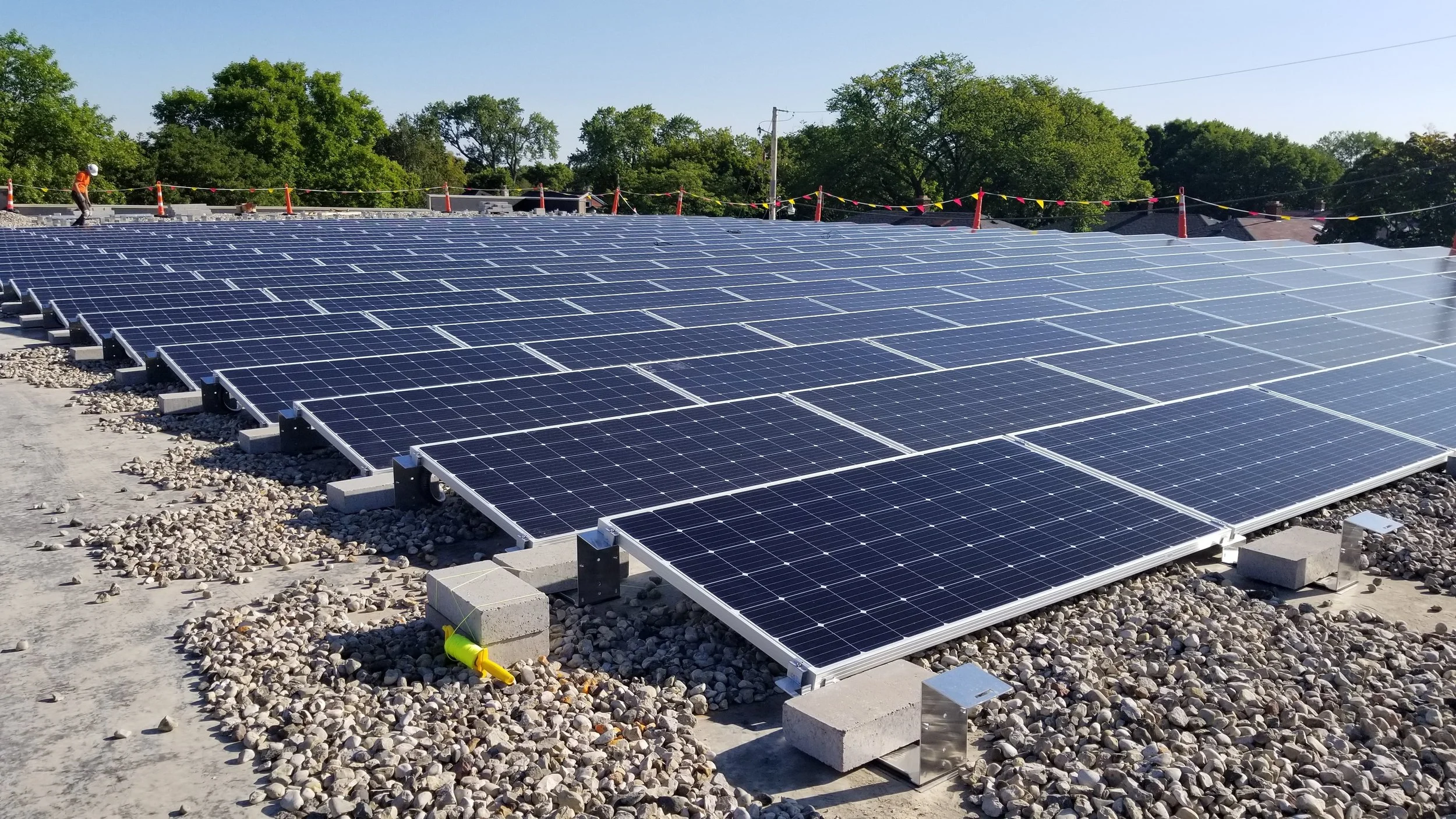
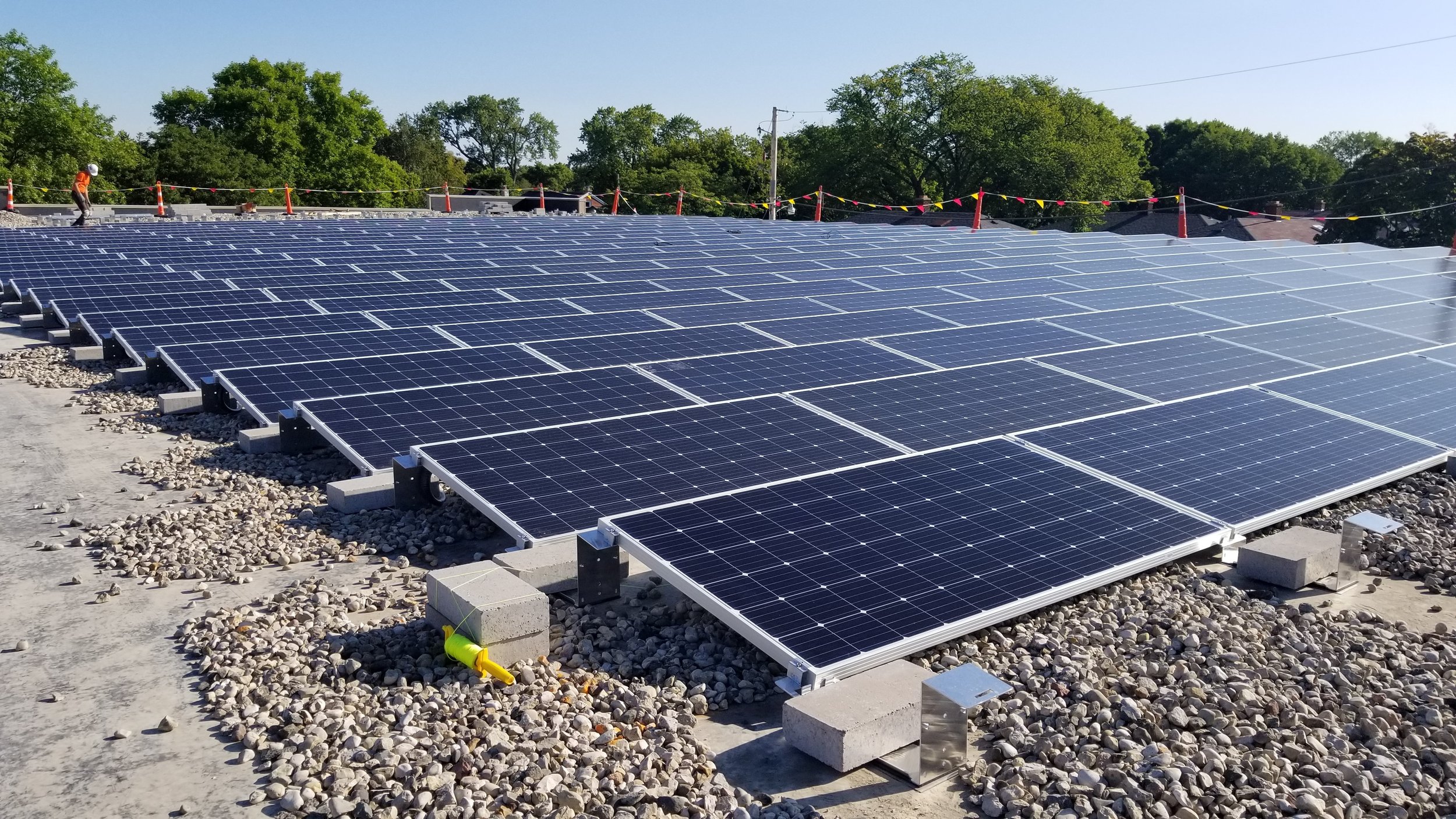
Village of Whitefish Bay’s rooftop solar array on the Dept. of Public Works building
Commercial Building Codes Factsheet
Wisconsin’s commercial building codes were recently updated to meet the 2021 International Energy Conservation Code (IECC). This is good news for Wisconsin, and will result in more efficient and resilient buildings across the state, in addition to economic, environmental, public health, and community benefits.
To learn more about why energy codes are important, how Wisconsin compares to other Midwest states and more, read this two-page factsheet produced by the Resilient and Efficient Codes Implementation (RECI) team!
Local Government Playbooks
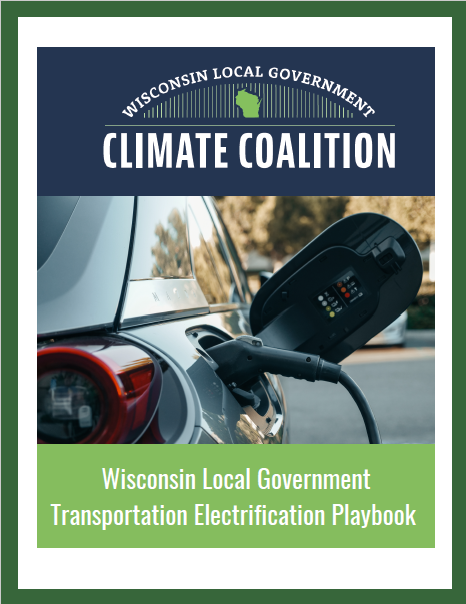
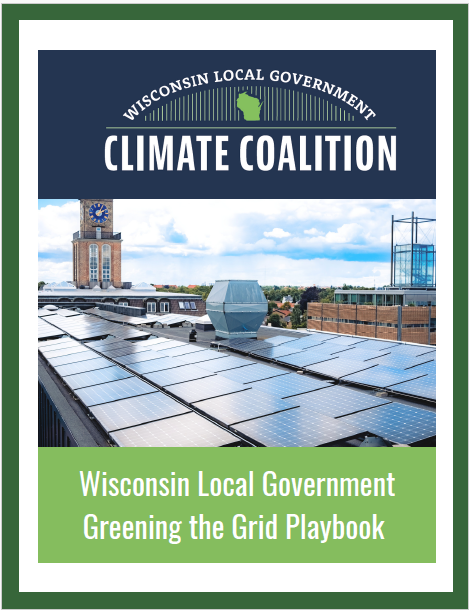
We worked with the Great Plains Institute to produce two “playbooks” specifically designed for use by local government staff in Wisconsin. These playbooks lay out step-by-step how local governments can green their grid (i.e. work towards local clean energy goals) and electrify transportation in their communities. The playbooks include useful features, like the level of difficulty for different strategies, what departments or stakeholders should be involved, project examples across Wisconsin and the Midwest, and links to other helpful resources and tools.
Click here to jumpstart efforts to electrify transportation in your community!
Click here to jumpstart efforts to green your community’s grid!
WLGCC partnered with ICLEI USA to create a Greenhouse Gas Inventory Playbook designed specifically for Wisconsin local governments. The playbook walks users through each step of building a GHG emissions inventory, and includes best practices, real-world examples from Wisconsin communities, and curated resources to support the process.
Click here to jumpstart efforts to conduct a greenhouse gas inventory in your community!
Elective Pay for Local Governments & Nonprofits
In July 2025, the Federal Reconciliation Bill made several changes to the underlying clean energy tax credits that are available through the elective pay (i.e. direct pay), a program that allows local government and non-profit entities to receive cash payments for eligible clean energy projects. These changes affect the timelines of various tax credits as well as many of the requirements. Lawyers for Good Government (L4GG) has closely tracked these changes, and has several up-to-date resources on its website.
Elective Pay Overview
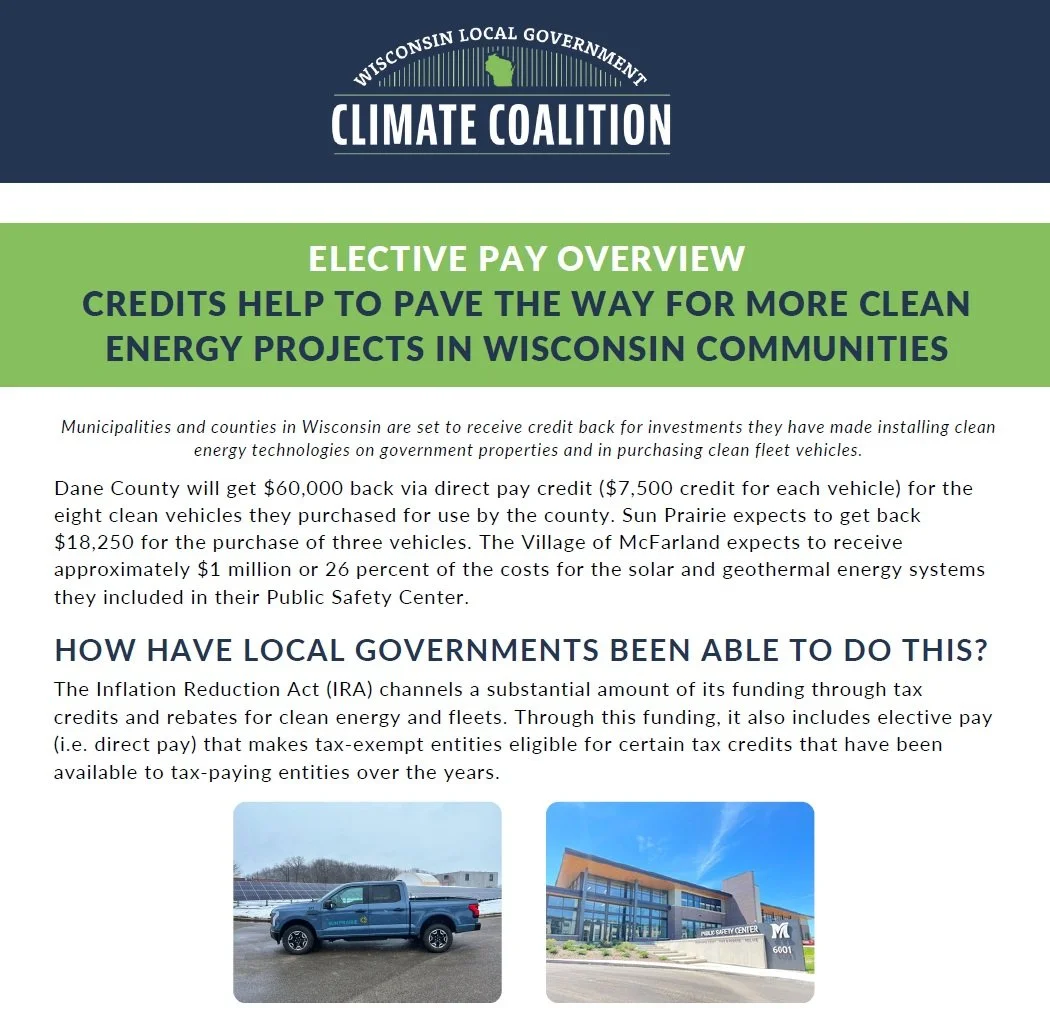
We developed this Elective Pay Overview document with Slipstream. It provides a quick-start guide on how local governments from Wisconsin can leverage elective pay tax credits under the Inflation Reduction Act (IRA) for clean energy projects. The document includes the eligibility, application steps, and tax credits for renewable energy systems and alternative vehicles. It also links to Wisconsin case studies and other useful resources to streamline the filing process.
Case Studies on Elective Pay
Check out these case studies that we developed with Slipstream to understand how local governments are leveraging elective pay for clean energy projects, overcoming challenges, and maximizing tax incentives.
-
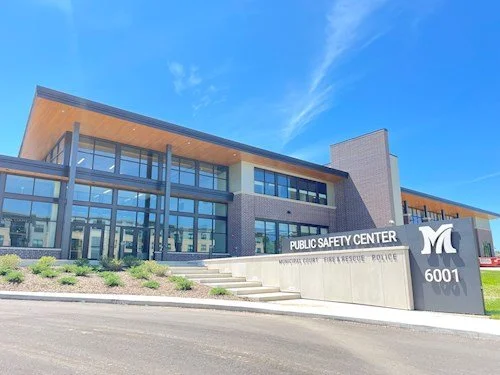
The Village of McFarland developed a Public Safety Center incorporating solar and geothermal energy, leveraging municipal bonds and tax incentives. This case study highlights lessons learned from IRS pre-registration challenges and how other municipalities can take advantage of similar opportunities.
-
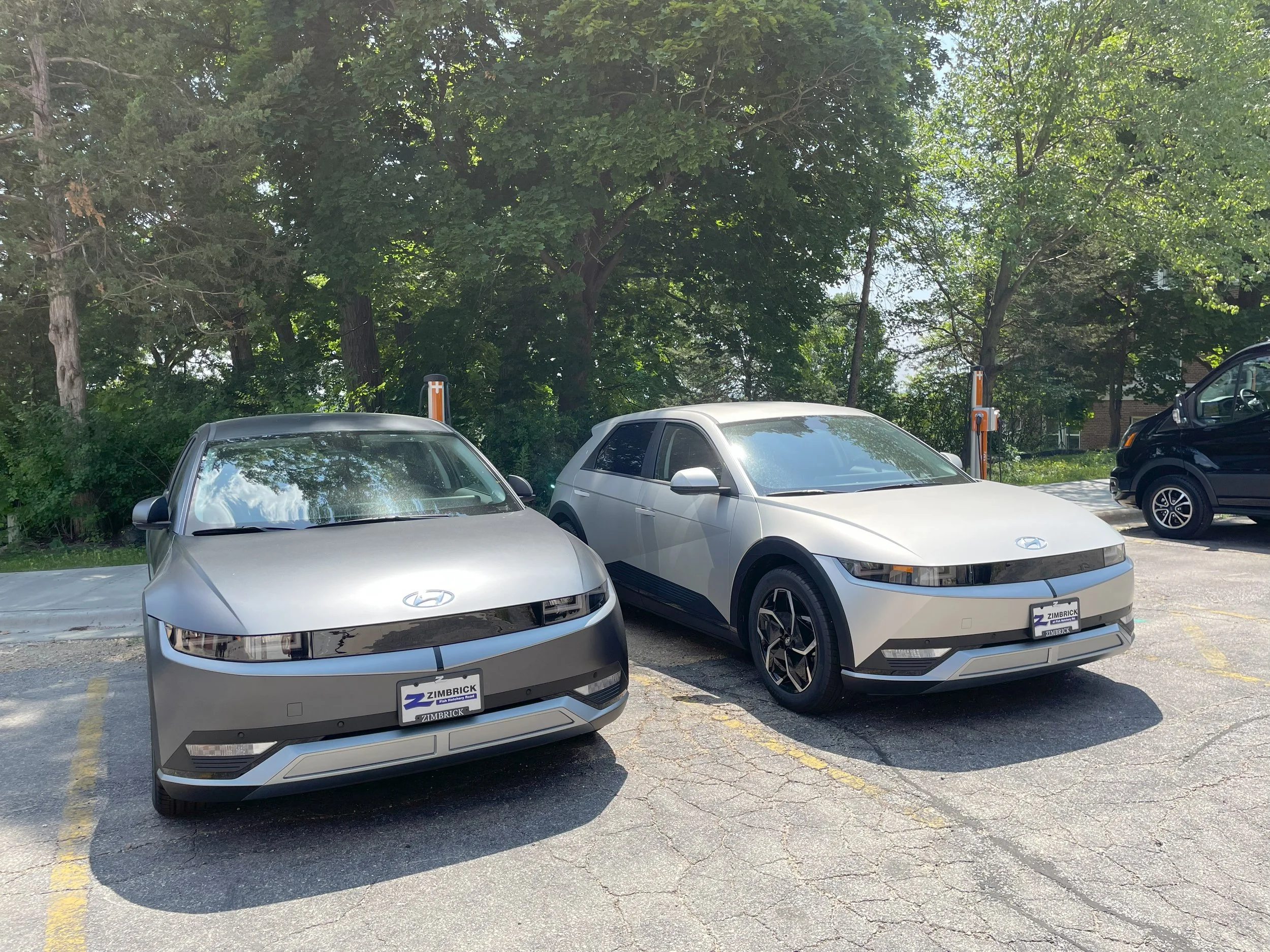
Dane County purchased eight electric vehicles for various departments, utilizing elective pay under the IRA to secure $60,000 in tax credits. The county overcame documentation and IRS system hurdles and plans to expand its clean energy initiatives, including more EVs and solar installations.
-
Sun Prairie acquired three electric and plug-in hybrid vehicles and expects to receive an $18,250 elective pay credit. The city navigated IRS system glitches and shares key lessons on pre-registration, while planning future projects including solar installations, EV charging, and geothermal systems.
A good place to start is their “Moving Forward with Elective Pay After H.R.1” webinar:
Many local governments have found the IRS “Pre-Filing Registration Tool User Guide and Instructions to be a helpful resource as they are pre-registering for elective pay credits.
Lawyers for Good Government Elective Pay & IRA Tax Incentives Resources page has lots of great fact sheets, webinars, etc.
Join us!
As a member, you’ll have access to our network of peers and a variety of resources and technical support to help your community reach its climate action goals.
Contact us for more information.