Resilient & Efficient Buildings Municipal Support Program
Resources
Explore the resources that are part of the roadmap designed to support local governments in improving building efficiency and resilience. The roadmap includes different mile markers that are strategies to help communities advance their sustainability goals. Each mile marker provides fact sheets, case studies, best practices, and tools to guide implementation.
Additional resources will be added to this page as they are developed.



Planning Efforts that Set Stage for Action
Effective climate and energy planning lays the groundwork for successful implementation. This mile marker explores how local governments can integrate sustainable building priorities into Climate Action Plans (CAPs) in ways that lead to clear, measurable action. A common challenge is the inclusion of broad recommendations that lack alignment with GHG reduction goals that results in inaction.
This mile marker encourages communities to assess how their planning processes can better prioritize building related emissions and support actionable outcomes. We answer the key questions of how can GHG reduction strategies be meaningfully embedded in planning documents? What planning practices have helped peer communities move from ideas to impact?
-
The City of La Crosse adopted a $9 million Energy Savings Performance Contract (ESPC) with Johnson Controls to advance its Climate Action Plan goals. This approach enabled energy efficiency and renewable energy upgrades across municipal buildings without upfront costs. Supported by rebates from Focus on Energy and Xcel Energy, the project is projected to save $11 million over 20 years. Improvements included LED lighting, HVAC replacements, and rooftop solar installations. This case outlines the planning and implementation steps La Crosse followed, providing a replicable model for other communities.
-
Learn about what goes in a plan, how to draft recommendations, and see case studies.
Lead by Example
This mile-marker provides information about how governments can demonstrate building resilience and efficiency best practices in their facilities to encourage their communities to do the same. This mile-marker serves as a guide to conducting thorough energy benchmarking, holding government facilities and buildings in the community to high standards, and implementing efficient and sustainable technologies in government facilities. If your government is not yet implementing any of these practices, please read on.
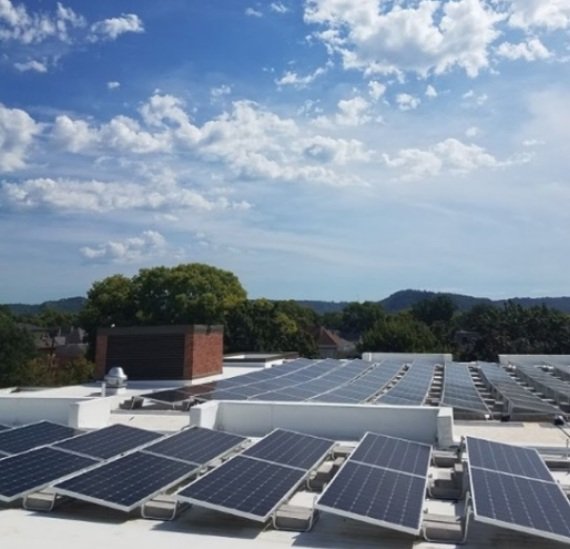
Governments can serve as role models to their communities by demonstrating how to best build sustainable and efficient facilities. Native nations and local governments can employ this strategy, called lead by example, to encourage sustainability, efficiency and resiliency measures in their communities by first implementing such measures within their own facilities and operations. Many governments are already putting this practice into action by installing rooftop solar on their municipal buildings, constructing LEED-certified buildings, and installing EV charging stations at public parking structures.
-
This fact sheet provides information about how energy benchmarking of government facilities can inform energy upgrade decisions, and details how ENERGY STAR Portfolio Manager, a tool developed by the US Environmental Protection Agency (EPA), can help local governments track and understand their energy use. If a local government has not yet benchmarked their facilities, they should read this fact sheet.
-
This fact sheet provides information about different third-party certifications that local governments can pursue to certify the sustainability or efficiency of their buildings. Local governments that are committed to building sustainable new buildings and want public recognition should read this factsheet. Some of these certification programs offer certifications for retrofits as well, but they mainly focus on new buildings.
-
This fact sheet details different building upgrades that can be considered before major equipment is replaced. The upgrades include measures to ensure that a building is not leaking heat, air and moisture, and measures to make existing equipment function more efficiently. If a government wants to upgrade/retrofit old buildings, these are some great first steps.
-
This fact sheet highlights how municipalities can use solar photovoltaic (PV) systems and microgrids to save energy costs, ensure reliable power for critical services, and advance community sustainability goals. It discusses key benefits and challenges of these technologies, provides details on cost assessments and funding opportunities, and offers resources, tools, and recommendations to support informed decision-making and effective integration of solar and/or microgrids into local plans.
-
This fact sheet explains how geothermal heat pumps (GHPs) work, their benefits in lowering energy costs and reducing carbon emissions, and the different types of GHP systems best suited for municipal settings. It also provides practical guidance on assessing system feasibility, addressing installation challenges, and accessing funding opportunities such as grants and incentives to make GHPs more cost-effective and accessible for your community.
-
This fact sheet describes Variable Refrigerant Flow Systems, which are heating and cooling systems that can be well-suited for a building with multiple tenants but are relatively new for cold-climate applications. If geothermal is not a viable option for your government, and you are interested in innovative ways to decarbonize your heating and cooling systems, read this section.

Tax Incremental Financing (TIF)
This mile marker explores how municipalities can align TIF with sustainability goals by incorporating energy efficiency, renewable energy, and climate resilience into project planning. It provides an overview of how TIF works in Wisconsin, case studies from communities from Wisconsin on how TIF was used to finance sustainable building upgrades, promotion of EV infrastructure, etc. Resources under this mile marker will help local governments better understand how to engage developers, leverage TIF to further the climate action outcomes, and navigate Wisconsin-specific TIF regulations and opportunities.
-
This resource provides a comprehensive overview of how Tax Incremental Financing (TIF) works in Wisconsin, including TID types, creation and amendment processes, and financing mechanisms. It also highlights opportunities for incorporating sustainability into TIF projects, supported by data, case studies, and key state guidance links.
-
This resource outlines actionable strategies for incorporating sustainability into local TIF policies, including setting sustainability requirements, defining eligible project costs, and using goals and disclosures.
It highlights examples from Wisconsin communities like Stevens Point and Middleton that have successfully embedded energy efficiency, EV infrastructure, and green building standards into their TIF frameworks.
Zoning Codes
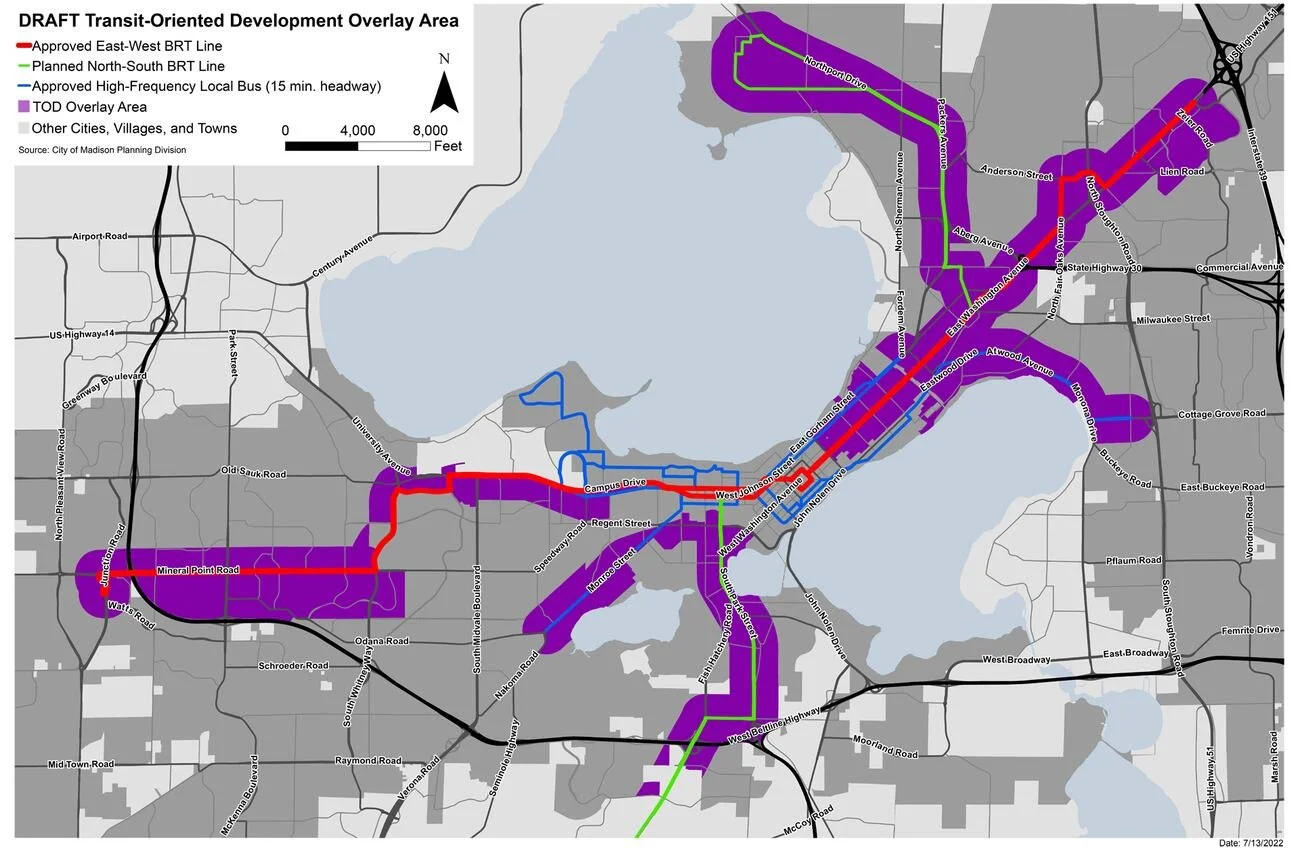
This mile marker explores how municipalities can integrate sustainability, resilience, and equity into their zoning codes. It provides an overview of zoning code structures and update approaches such as partial rewrites, overlays, and comprehensive overhauls. It offers practical strategies to remove barriers, create incentives, and fill regulatory gaps. Case studies from Wisconsin communities demonstrate how zoning has been used to support clean energy, affordable housing, climate adaptation, and transit-oriented development. Resources under this mile marker will help local governments align zoning with climate action goals and navigate Wisconsin-specific planning context.
-
This resource provides an overview of how zoning codes can advance sustainability goals in Wisconsin. It outlines how zoning policies impact land use, transportation, energy systems, housing, and public health. It explores how removing regulatory barriers, offering incentives, and setting minimum environmental standards can be used under zoning. The resources discussed the Sustainable Development Code and links to key tools, case studies, and legal considerations for local governments updating their codes to reflect climate and equity priorities.
-
This resource outlines strategies for updating zoning codes and presents three main approaches: partial rewrites, zoning overlays, and comprehensive overhaul, each illustrated with case studies from communities like Madison, Middleton, Verona, and Sun Prairie. It also highlights model policies and tools to guide local governments in implementing effective, sustainability-focused zoning reforms.
-
These memos address additional questions that Local Government Advisors had related to zoning.
Memo on Transit-Oriented Development
Memo on Native Planting, Dark Sky Lighting, and Floor-to-Area Ratios
Local Policies that Prioritize Resilient & Efficient Buildings
This mile marker focuses on local policies role in sustainability, energy efficiency, and long-term community resilience. Resilient policies help local governments mitigate climate risks, reduce greenhouse gas emissions, and ensure buildings can adapt to changing environmental conditions. This mile-marker outlines key criteria for evaluating policies, such as effectiveness, feasibility, and community impact, while also identifying common challenges and opportunities.
-
The Government Policy Tracker offers detailed insights into policies on TIF, Zoning, Sustainable Building Ordinances, and more. It provides concise, government-specific guidance to support resilient and efficient building practices.
-
This fact sheet provides information about local benchmarking ordinances. Benchmarking ordinances set requirements for large buildings to track and report their energy use and report this data annually to the municipality. Local governments that are already benchmarking municipal buildings and want to take the next step in community-wide efficiency should read this fact sheet.
-
This document provides a comparison of different third-party organizations that provide support services and software to help with implementation and administration of benchmarking ordinances. Local governments that have decided to implement a benchmarking ordinance should consult this document to find the third-party support that best fits their needs.
-
Several Minnesota municipalities have implemented sustainable building policies, which establish minimum sustainability, energy efficiency and resilience criteria beyond what’s required by code for newly constructed buildings to meet and standardize these criteria across multiple local programs. This type of policy does not yet exist in Wisconsin, but these policies are good models for what could be implemented in our state. To learn more about these policies, read this fact sheet.
-
The Resilient and Efficient Codes Implementation (RECI) team has developed a sustainability standard for buildings to encourage uniformity across multiple local government jurisdictions, and across multiple programs and policies within the same jurisdiction. To learn about the RECI team's recommendation to encourage consistency and high standards, read this fact sheet.
-
This resource answers frequently asked questions about a percent-better than code standard.
-
This factsheet offers a summary of how to develop a Building Performance Standard (BPS), including steps to implementation and design considerations.
-
This resource includes a list of Energy Raters and Commissioning Agents in Wisconsin.
-
This resource provides a detailed table of grants and funding opportunities for local governments, focusing on sustainability projects for buildings, such as energy efficiency upgrades, solar installations, and other green initiatives.